
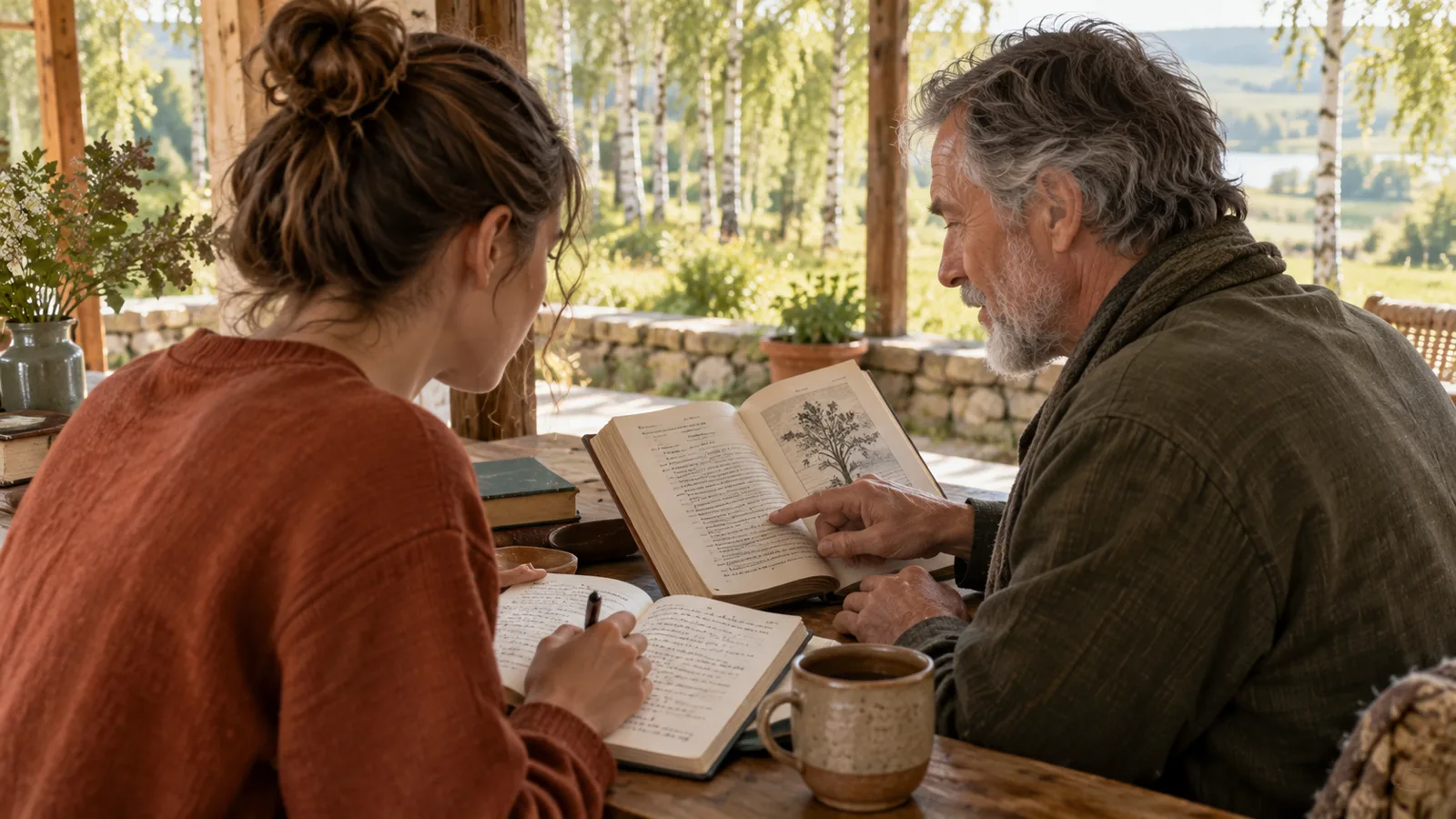
Every rural job has time: preparation, execution, waiting, checking, returning to the task. This rhythm provides the basis for the practice relay. One group completes a small cycle and transmits the following description of what has been done. Not only is the result attractive, but also the answer to the question, thanks to which it turned out. How long did it take? Who helped you? What conditions were necessary? What has had to change in the course of work?
Transfer method with its context
В FENIX “Practice of Self-Development” own work, mentor support and verification of the result are associated with the transfer of experience. The Rural Relay is an editorial proposal to apply this approach between groups and territories. The unit becomes a practice card. It describes the task, participants and roles, initial conditions, sequence of actions, time spent, the result obtained and the questions left open.
Suppose the library together with the residents prepared a training catalog of local crafts. Another village may need a form of card, a way to coordinate authorship or a script for a meeting with the master. However, the composition of the crafts, the availability of the room and the expectations of the participants will be their own. Therefore, the host group first examines the conditions, then chooses what to transfer, and only then tries a way in their own work. Adaptation becomes part of the experience and gets a separate record.
The season sets the conditions, people choose the pace
Spring, summer, autumn and winter can serve as convenient editorial guidelines. One cycle is devoted to observation and preparation, another to the performance of work, the third to analysis and transmission. But the calendar scheme should not assign the same pace to different places. People’s workload, climate, site availability, and the nature of the task differ. Dates for a particular relay are determined after discussion with participants; they have not yet been appointed in this section.
For a cycle, one achievable result is enough: a described place history, a set of training cards or instructions for a small workshop. Before starting, it is useful to write down what is already there and what is still missing. If the room, materials or participation of the mentor is only promised, this remains a condition that needs to be clarified. So the idea gets a scale commensurate with the real possibilities, and the next participant sees the starting point.
Analysis makes the result clear
The final meeting begins with a comparison of the plan and the work done. Participants show material, explain changes and collect specific comments. The test can be simple: a new reader finds the right entry, understands the instruction, and names the questions that it does not answer. If part of the task is not completed, it is fixed along with the cause. Such a record helps the next group to more accurately assess their own conditions.
For portal analytics, the date of observation, the date of publication and the period of the work itself are important. Their difference allows to compare cycles. The direction of the changes also needs to be explained: has the description become clearer, has the accessibility of participation expanded, has the source materials been preserved? The answer must be based on evidence. The history of the village and the memories of different generations add a time context; they are preserved with sources, without turning different eras into a general numerical estimate.
From local work to general journal
The practice card can be the basis of an article, a round table discussion or a thematic review in Portals Magazine. В Events 365 plus 1 It is proposed to associate such publications with a return to the result: what changed after the first message, which version of the material is relevant, who continued the work? The publication gets meaning as part of the shared memory and the possibility of the next conversation.
Proposal for the first relay: select one local task, complete the cycle and pass the next group a practice card along with source materials and questions for verification.