
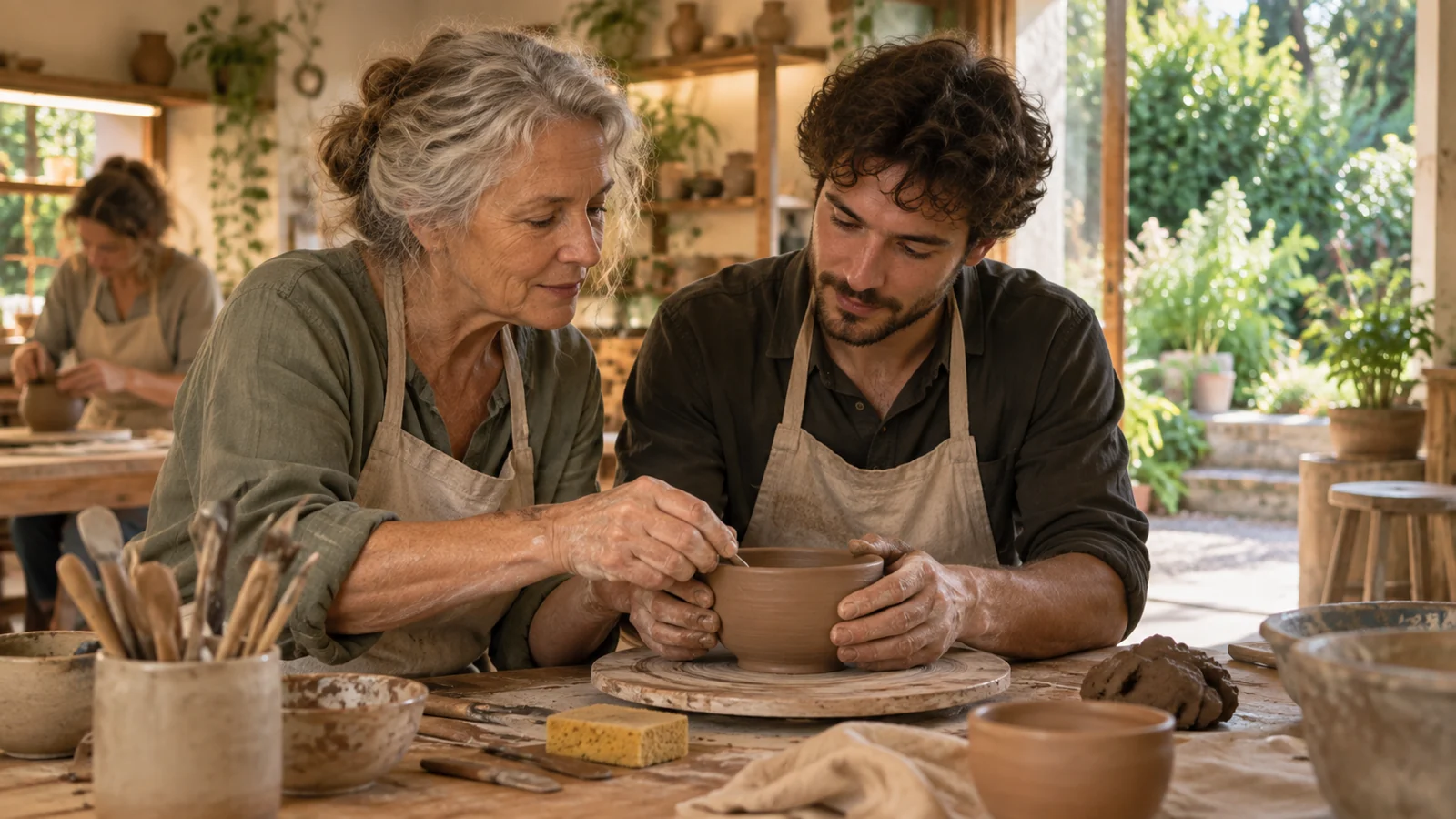
You can start a conversation about the future of the village with a simple question: what can people do here? Who knows the history of the old house, can explain the device of the tool, distinguishes between local plant names, knows how to organize joint work? Such a conversation opens up knowledge that is rarely placed in the official description of the territory. They exist in action, habits, language, and memory. For this experience to remain accessible, it needs an interlocutor, a continuation and an understandable form of preservation.
From Knowledge Media to Collaboration
В FENIX “Foundations” development begins with personal choice and continues in practice with support. For a rural topic, this is a productive starting point: to offer a person to convey what is important to him, and to find a small job in which the experience will be understandable to another. A workshop can start with one subject, a meeting with one question. The amount of participation is consistent with the time and desire of people.
Imagine a training meeting around a wooden thing with noticeable traces of repair. The wizard shows the connection device, the participant makes a drawing, the owner tells the story of the object. Three different results arise here: mastered reception, description of the design and recording of the memory. It is useful to keep them separate. The owner's story is designated as a story; the age assumption of a thing is as an assumption; the document found is as a source that can be verified.
Memory requires precision and tact
This is the distinction proposed in the document. “Culture and Science”. Cultural meaning allows different readings, and information about origin needs to be based. In the rural archive, this is especially noticeable: one subject connects family memory, work history and place changes. Next to the photo you need the name of the author of the recording, the date, the words of the narrator and the terms of use. The personal story is published by agreement; part of the family material can only remain with the owner.
A convenient library of experience should answer the reader’s questions: what is the record about, who made it, when, on what grounds and what is allowed to do with it? It is enough to start with a small coordinated catalog. Paper cards and digital copies can complement each other. Value arises where the record can be found, understood and clarified, and the author can correct the inaccuracy. The number of files uploaded does not show this in itself.
Learning through the right thing
Knowledge transfer becomes more sustainable when it has a local task. For example, participants can describe a family collection of tools, prepare a clear instruction manual for a study workshop, or compile a dictionary of place names with sources. These examples are possible works, not information about the current project. In each case, the result, available resources, support of the mentor and a person who will be able to assess the clarity of the finished material are determined in advance.
A useful question to check: will another participant be able to take advantage of the result without the author’s constant presence? Let him find the right card, explain the content of the scheme or repeat the agreed training method. If this is difficult, the next step becomes visible: to complete the description, change the language, add a picture. This analysis combines the educational result with the quality of the overall resource. It allows you to notice the work of the mentor, and the independent movement of the student.
More important than a one-time meeting
In the proposed section "Living Village" memory, knowledge and work form a common cycle. The person chooses the question, receives support, does the work, checks it and leaves the experience to the next participant. The season may end, the composition of the group may change; clear records help to continue the work. In this case, the place retains its own voices: the same form of the card does not require the same stories, crafts or ideas about the future.
The first result can be formulated modestly and accurately: one work that is understandable to another person; one source that is preserved with context; one next step that the participants chose themselves.